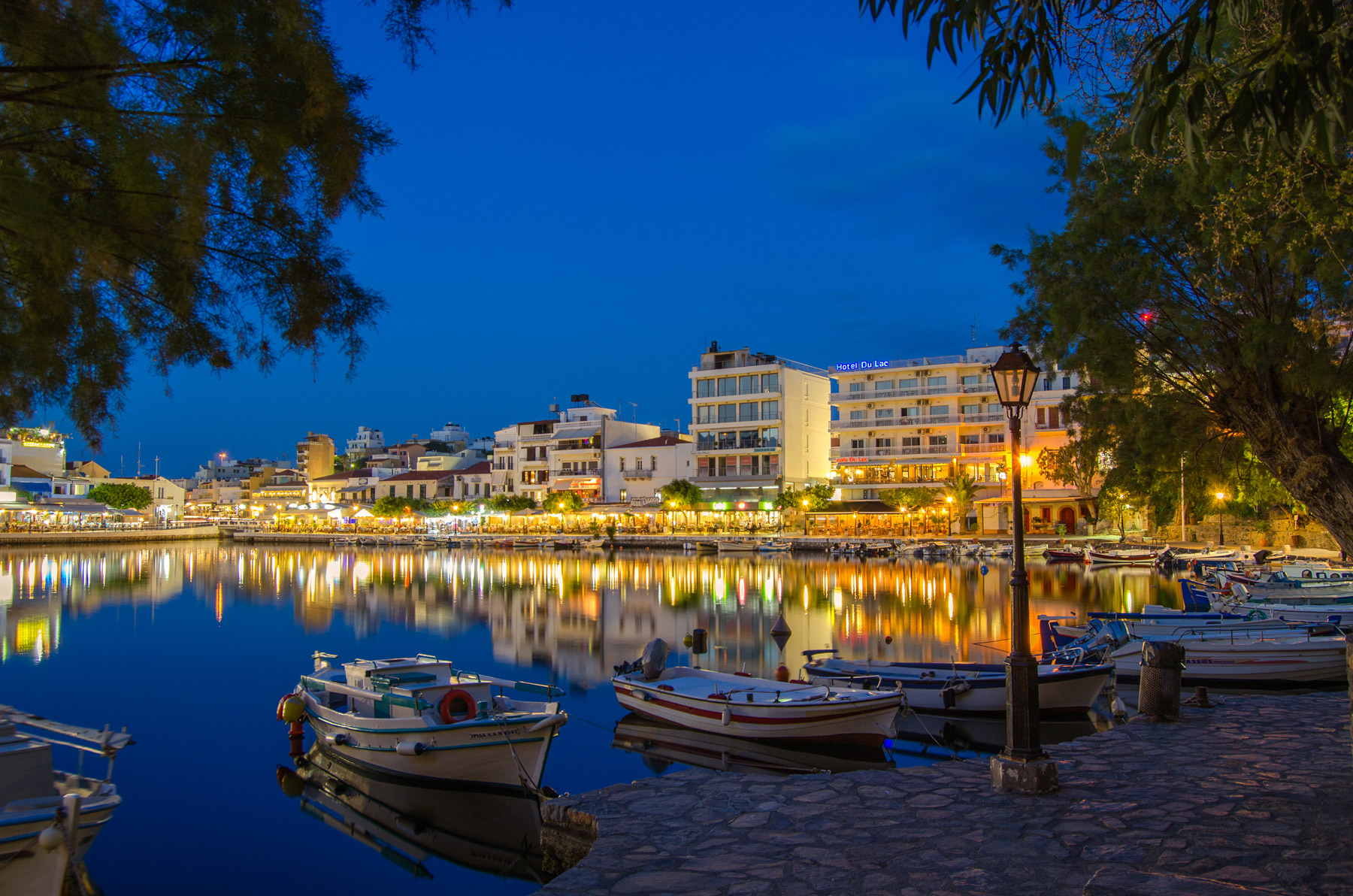
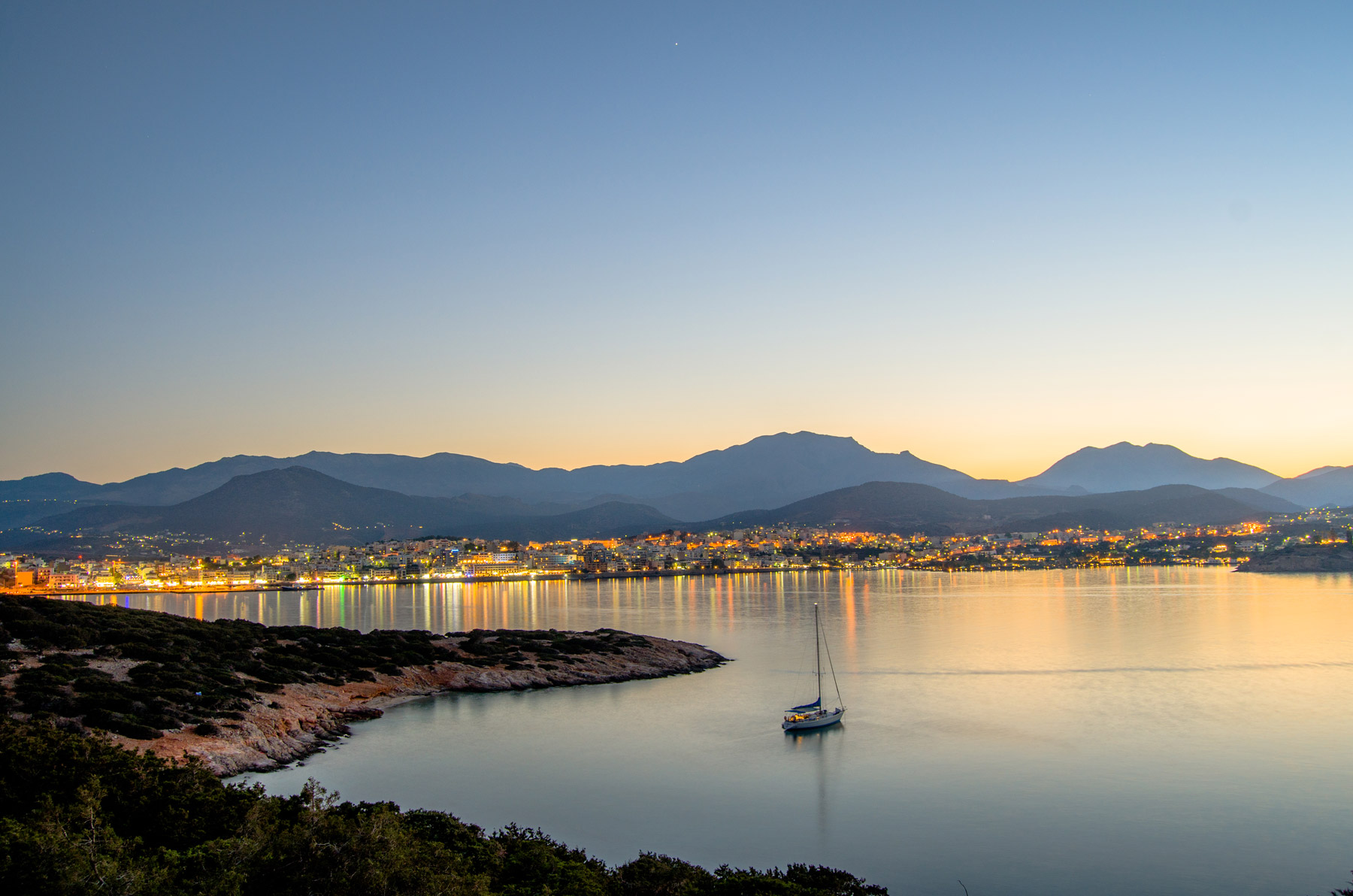
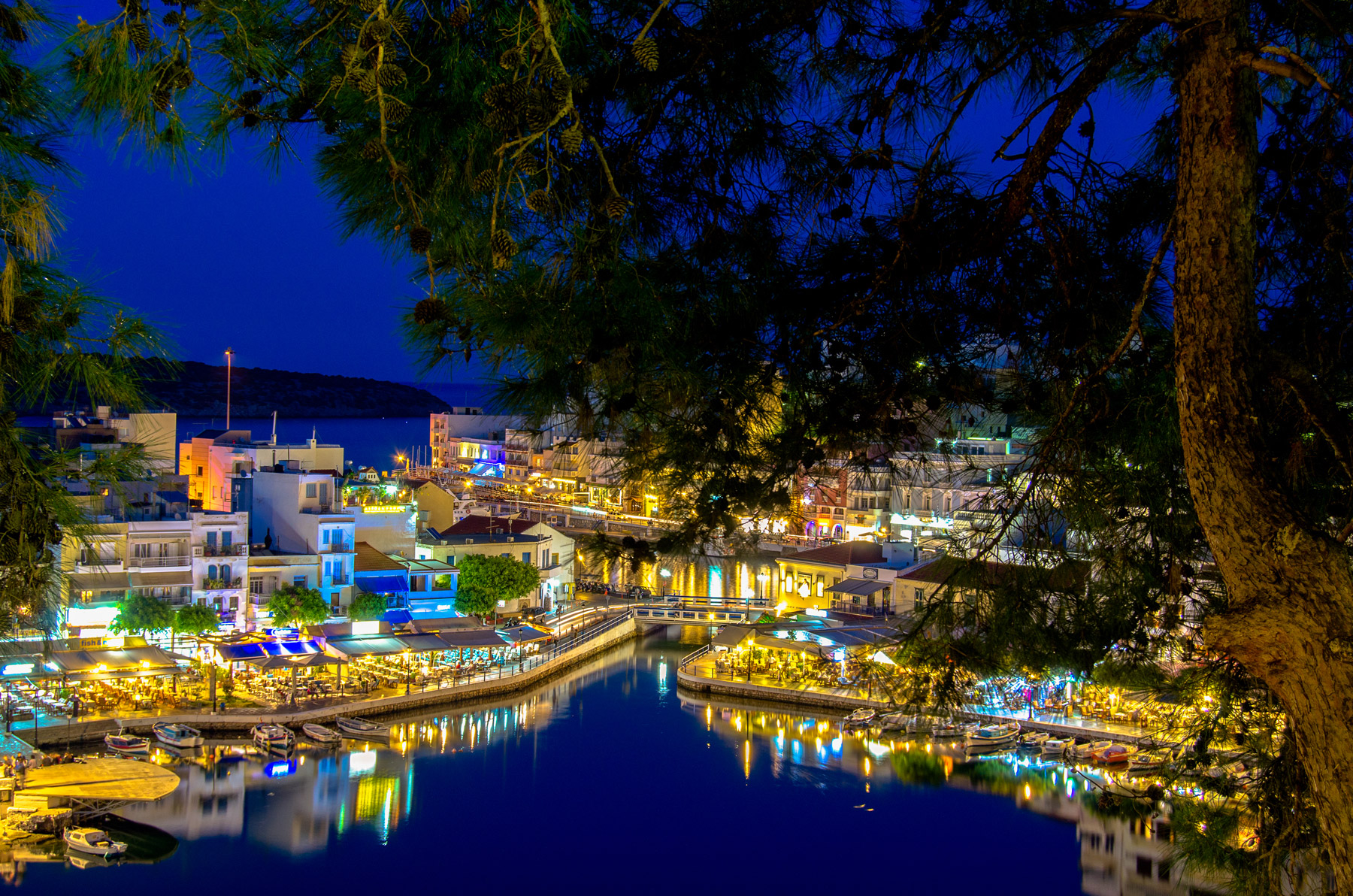
Agios Nikolaos è una pittoresca cittadina che si trova nella parte orientale di Creta, nella provincia di Lassithi. Cuore pulsante della città è il lago Voulismeni che è collegato al porto da un canale.
Il centro della città è molto animato, con molte taverne e ristoranti dove gli ospiti possono gustare la famosa cucina cretese e mediterranea. Molte spiagge con acque cristalline e una varietà di caffè, bar e discoteche garantiscono vacanze indimenticabili a migliaia di turisti che visitano Aghios Nikolaos ogni estate.
Gli appassionati di storia possono visitare il Museo Archeologico, dove sono esposti splendidi reperti archeologici di epoca minoica e pre-minoica scoperti nei vicini scavi archeologici.
Agios Nikolaos è raggiungibile attraverso l'aeroporto internazionale di Heraklion "Nikos Kazantzakis" e da molti traghetti giornalieri al porto di Heraklion.
Il piccolo porto di Agios Nikolaos è il punto di partenza per escursioni a Elounda e Spinalonga.
Crete is the largest of the Greek Islands and the fifth in size in the Mediterranean. This island has had a troubled history not least 464 years under Venetian rule and ensuing centuries of Turkish domination marked by no fewer than ten major revolts. Crete was only united with Greece in 1913 so islanders tend to regard themselves as Cretan first and Greek second.
Crete is 250 kms long and has four mountain ranges. Lefka Ori near Chania, Ida (local name Psiloritis) west of Heraklion, Dikti - Lassithi plateau and the Sitia Mountain range in the east.
Crete's historical record goes back to 2000 B.C. with the Minoans. Sir Arthur Evans, an English archaeologist discovered the first remains of this advanced race at the magnificent palace of Knossos and due to his finds he was able to write a new chapter in the history at the ancient world.
Now many examples of Minoan architecture and culture have been uncovered and can be seen throughout Crete.
Crete has much beautiful and unusual scenery. In eastern Crete places such as the Lassithi plateau, a vast fertile plateau, in western Crete one of the greatest attractions is the spectacular Samaria National Park, which includes the famous Gorge of Samaria.
The history of Crete is both fascinating and turbulant. The first inhabitants of Crete lived in caves and open settlements. It is thought that these people possibly originated from Asia Minor and during the Neolithic period they achieved a certain degree of civilization. Remains of this era have been found which include ceramics and stone tools.
After this came the most famous of Cretan civilisations, the Minoans. It is thought that the Minoans were short in stature, of slim athletic build, with black hair and eyes and refined features, they closely resembled the Ancient Egyptians.
The Minoan civilisation had a well organised society and state, achieving peace and unity
throughout Crete with a monarch referred to as Minos and their art and culture dominated most of the Mediterranean. During the Minoan period Crete became densely populated. Homer speaks of tile island's "a hundred cities" the most important being Knossos, Phaistos, Zakros and Malia. All locations having magnificent palaces with not only splendid decor but efficient drainage and plumbing systems. The decline of the Minoan civilization came suddenly and it has never been determined how this happened. Possible explanations are a violent volcanic erruption on Santorini, an invasion of the Archaens from the Greek mainland, or some kind of internal strife.
It was at this time that the Dorians, Groek tribes from the north invaded bringing iron with them.
The Dorian occupation caused Crete to divide into many small independent city states, with regular inter- city wall are. Then in 67 B.C. the Romans conquered Crete, Gortys becoming the capital of the Roman province of Crete and residence of the Governor.
Crete flourished during the early Byzantine period until the island was conquered by Saracen Arabs in 823, who wore then defeated by the Byzantine emperor, Nikiphoras Phokas. after more than 100 years of occupation. In 1204 it was the turn of the Crusaders, who divided the Byzantine empire among themselves and Crete was sold to the Venetians. The strong fortifications of the Venetian era can been seen today in places such as Chania, Heraklion and Rethymnon.
In 1669 the Turks had conquered Chania, Rethynmon and Heraklion and shortly after this the conquest of the island was complete. The Turkish reign of terror lasted until 1898 when the Cretan revolution began against the Turks who were eventually conquered and forced to hand over the administration of the island to Prince George of Greece.
In 1913 the longed for union with Greece took place and the Turkish element left the island. Later Crete was occupied by tile Germans, and Cretans joined British forces in defence of the island.
The battle lasted ten days and when allied forces evacuated, the Cretan resistance continued to fight alongside special British agents in harassing German occupation forces.
Since the war, tourism has developed on a large scale and has brought rapid prosperity to the towns. Increasing numbers of tourists arrive each year attracted by all that this unique island has to offer.
It must be said the Cretans are some of the proudest and most hospitable people in the Mediterranean.
They will greet a stranger out of respect and may even want to shake hands a natural Cretan way of saying "Hello". In shops or markets, away from tourist places, a visitor may be asked to sample some food before purchasing or be onered a coffee or a drink. This is a form of appreciation.
If you are walking through a village or the countryside and meet a Cretan in passing, greet them with "Yassas" - to which the Cretan may reply "Hairete" or "Sto Kalo" a lovely phrase, meaning, 'go well'.
During the Siesta, a Cretan must not be disturbed. It is important to rest and be relaxed.
It is a Cretan's pleasure to assist someone in need. In company of locals, do not be shy to ask personal questions; this is customary and part of daily Greek conversation. They will often want to know where you are from, how many children you have, how old you are, what work you do and how much money you earn or take as a Pension.
I f you are invited out for a meal, any attempt to insist on paying or sharing the bill will be taken as an insult. If you feel strongly, then repay their kindness with something else. A gift of a box of cakes, biscuits or chocolates that all the family can share, never goes amiss.
In Crete do not feel shy to take your children everywhere you go at night. They love their children, spoil them rotten and include them in all events such as eating out late at night at a taverna. It is part of a child's growing up to participate in all aspects of life with their family.
One of the most important word in the Cretan language is, "Filoxenia" which means, 'Hospitality'.